


Table of Contents
Introduction
Article 1 – 5-minute beginners guide to surfing equipment
Common Questions
Article 2 – How difficult is it to learn to surf?
Article 3 – How late is too late to start surfing?
Article 4 – Is surfing an expensive hobby?
Surfboards
Article 5 – Surfboards: How to choose a surfboard?
Article 6 – Surfboards: What are surfboards made of and how do I take care of them?
Article 7 – Surfboards: Which size surfboard should a beginner use? Why?
Article 8 – Surfboards: What’s a good beginner’s surfboard to buy?
Other Equipment
Article 9 – How to choose a surfboard leash (legrope)
Article 10 – Why do surfboards have fins?
Article 11 – Why do surfers put wax on surfboards?
Article 12 – Surfboard Tail Pad & Boardbag. Do you need them?
Article 13 – What wetsuit should I buy?
Extras
Article 14 – Top 15 Mistakes When Buying a Surfboard Setup
Article 16 – How and Where Should I Start Learning to Surf?
Article 17 – Top Ten Resources to Teach Yourself to Surf
Article 18 – Where to Learn to Surf
Article 19 – What are the Best Surf Schools?
Article 20 – What is the best time to surf?
Article 21 – What are the Best Surfer Hacks?
Article 22 – What are some things that you shouldn’t do while surfing?
Article 23 – What should surfers do to be safe?
Article 24 – How often do surfers break surfboards?
Article 25 – How to position your surfboard – in and out of the water
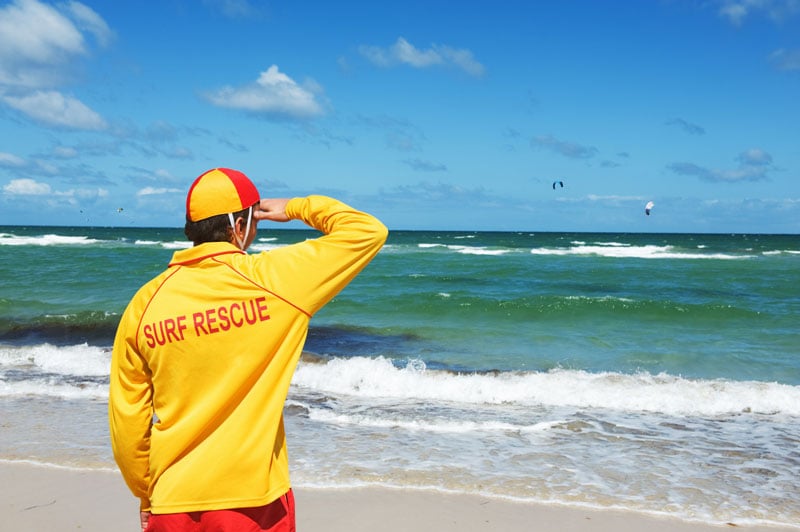
There are plenty of activities more dangerous than surfing, but paddling out into the ocean on a piece of fibreglass or foam carries inherent risks. There are, however, certain things that you can do to mitigate these for both yourself and others, and we’ve gone through some of the most important of those below.
Always surf with at least one other person in the water
This is a rule that surfers become less inclined to follow as they become more experienced – though some will still rarely if ever surf alone – but as a beginner it’s imperative that you stick to it. Hopefully you’ll never be in a position where you need the help of a fellow surfer, but surfing is a sport reliant on nature and unexpected things can happen.
Probably the main concern in this regard is the potential to receive a knock to the head which leaves you either unconscious or unable to properly get your bearings. This can happen simply from the impact of a fall on bigger waves, but more often than not it will be from a big, heavy surfboard hitting you in an inopportune place. Unless you’re surfing big waves or cop it right in the wrong spot, this isn’t likely to do major damage to you, but when you’re in the ocean it only takes a few seconds of impairment to cause a lot of trouble.
If you get knocked out for 10-20 seconds, the presence of somebody in the water with you can literally be the difference between life and death. It doesn’t take long to drown, but it also doesn’t take long for somebody you’re sharing the water with to lift you onto your board to safety if you’re struggling.
Other issues can arise too – you could snap your leash, leaving you stranded in the ocean without a paddle, or you could get dragged much further out than you’d ever intended to be by a current. With people around you, these issues are minor, but if you’re on your own they can quickly develop into a big problem.
Make sure the road in front of you is clear before take-off
This is one that we’ve mentioned a few times in previous articles, but it’s for a reason. The most common safety issues which you’ll face when surfing come from other surfers – typically those doing the wrong thing. Don’t be one of those people.
It can be hard when there are lots of people in the water, particularly when you’re still learning and don’t necessarily have complete control of your board, but it’s vital to be sure that, when paddling into a waves, all the spots where your board (or you) could potentially end up are clear of people.
If you’ve surfed a little before and are capable of going left or right on the unbroken face of the wave, this will generally mean you’ll be looking down the line in the direction you’ll be surfing. If you’re a less experienced surfer, however, then you’ll most likely still be surfing straight back towards the shore, so that’s the area you need to be wary of. If there are people flailing about in front of you who have just taken a wave, are out of position, or are swimming, then give that wave a miss. There will be plenty more coming along. Remember also to be wary of people who have taken off further to the inside of the wave you’re paddling for, and are already on the wave.
Hold onto your board when duck diving
This is a big one, and something that an unfortunate number of people either don’t realise or simply forget when they’re out in the water. When a big wave crashes in front of you, it’s easy to think that your board is going to cause more problems than it will solve – particularly if it’s a heavy board.
This is probably true for you, but if there’s a person behind you then it certainly isn’t. Some waves are just too big to properly duck dive – again, particularly if you have a longboard – and if you try to hang on to it then it’s more likely that you’ll get thrown about by the wave. If you let it go, however, and there’s somebody behind you, your board can do them a lot of damage.
If you’re certain that nobody is close enough to you for it to be a concern, however, then go for it – if you let go of your board and duck under the whitewater your leg rope will bring you back together once the wave passes. But you need to be 100% sure that nobody is within reach, and this is where many people misjudge just how far ‘within reach’ refers to.
You need to bear in mind that for a person to be within reach of your board, they can be as far away as the length of your board, plus the length of your leg rope (and a little extra room for stretch), plus a little more to cater for the fact that you’ll probably get thrown back a bit. If your leg rope is 7-foot, for example, and your board is 8-foot, if anyone is within around 20-foot (about six metres) of you then you need to hold onto your board.
-
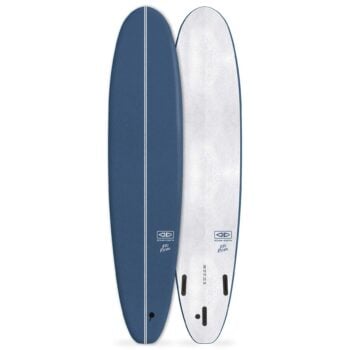
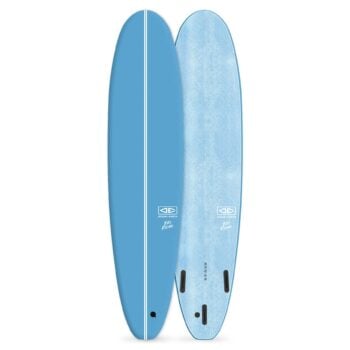
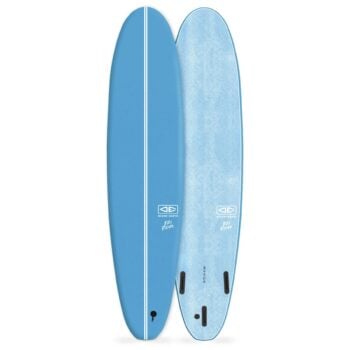
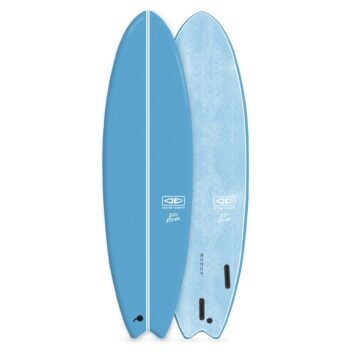
 Ocean and Earth Ezi-Rider 2.0 Softboard 9’0$655.00
 -
Ocean and Earth Ezi-Rider 2.0 Softboard 8’0$625.00
-
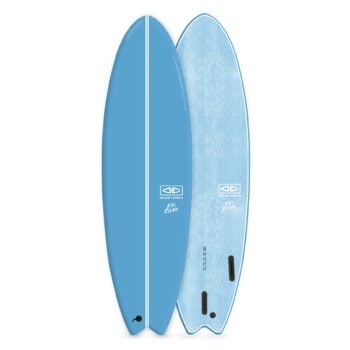
Ocean and Earth Ezi-Rider 2.0 Softboard 7’6$585.00
-
Ocean and Earth Ezi-Rider 2.0 Softboard 7’0$565.00
-
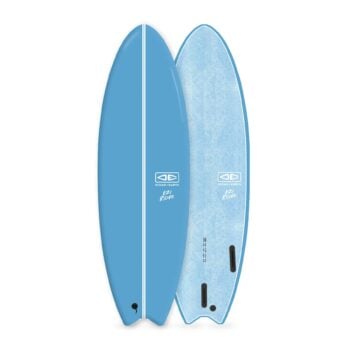
Ocean and Earth Ezi-Rider 2.0 Softboard 6’6$540.00
-
Ocean and Earth Ezi-Rider 2.0 Softboard 6’0$520.00
Surf waves that you are comfortable with
This is another thing that we have mentioned on a few occasions, but it’s such a common error that it’s worth mentioning again. If you surf waves that are within your capabilities, then the likelihood of something going wrong are drastically reduced. In contrast, if you try to impress your mates by heading out to waves that you likely aren’t yet capable of surfing, the likelihood of something going wrong is significantly higher.
And this isn’t just for you – if you’re incapable of dealing with the conditions that you’ve paddled out into, those around you are also at risk, whether that be from your board flying around or an inadvertent drop in. So stick to what you’re comfortable with.
So there you have it – some simple and easy tips to follow to make sure that both you, and those around you, are a little safer in the water. Next up we’re going to veer away from the potential surfing has to cause damage to people, and focus more on the damage you can cause to your surfboard.

