


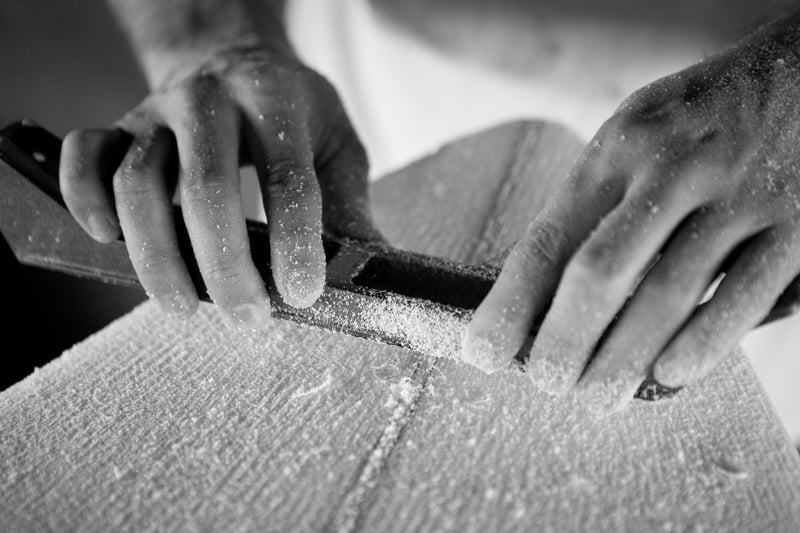
Softboards are safer, they won’t hurt as much.
Beginners’ guide to surfing
Read Time: 5 Minutes
Table of Contents
Introduction
Article 1 – 5-minute beginners guide to surfing equipment
Common Questions
Article 2 – How difficult is it to learn to surf?
Article 3 – How late is too late to start surfing?
Article 4 – Is surfing an expensive hobby?
Surfboards
Article 5 – Surfboards: How to choose a surfboard?
Article 6 – Surfboards: What are surfboards made of and how do I take care of them?
Article 7 – Surfboards: Which size surfboard should a beginner use? Why?
Article 8 – Surfboards: What’s a good beginner’s surfboard to buy?
Other Equipment
Article 9 – How to choose a surfboard leash (legrope)
Article 10 – Why do surfboards have fins?
Article 11 – Why do surfers put wax on surfboards?
Article 12 – Surfboard Tail Pad & Boardbag. Do you need them?
Article 13 – What wetsuit should I buy?
Extras
Article 14 – Top 15 Mistakes When Buying a Surfboard Setup
Article 16 – How and Where Should I Start Learning to Surf?
Article 17 – Top Ten Resources to Teach Yourself to Surf
Article 18 – Where to Learn to Surf
Article 19 – What are the Best Surf Schools?
Article 20 – What is the best time to surf?
Article 21 – What are the Best Surfer Hacks?
Article 22 – What are some things that you shouldn’t do while surfing?
Article 23 – What should surfers do to be safe?
Article 24 – How often do surfers break surfboards?
Article 25 – How to position your surfboard – in and out of the water
One of the most confusing components of choosing a suitable surfboard for beginners is having to sift through the range of different materials which they are made out of. The difference between surfing a fibreglass board, an epoxy one and a softboard is not something that the layperson knows, so we’re here to give you a bit of an insight into the differences in performance offered by the various types of board.
Softboards
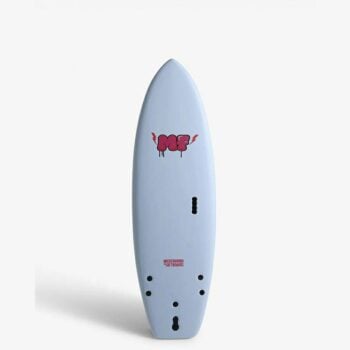
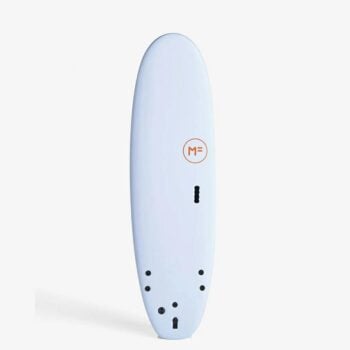
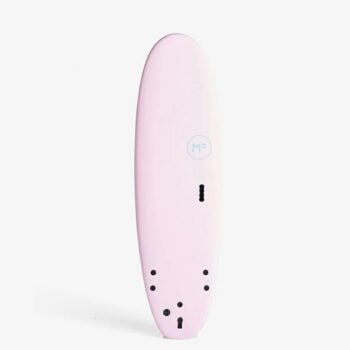
Softboards are a type of board that you’ll often see beginners on, and there’s plenty of reasons why. These boards are generally made out of a type of foam known as EPS, and for people learning to surf these can be an ideal option.
In most cases softboards have quite a lot of volume, which as we’ve mentioned in previous articles is crucial for someone learning to surf. More volume means more stability, and more time standing up on your board.
They’re also a safe option, because, as you might have guessed from the name, they’re soft! Ideally you still don’t want to be taking it on the head or throwing it into a pack of fellow surfers, but if you do the damage will be a lot less significant than it would be if you were surfing a different kind of board.
On top of this, they’re much more difficult to damage. You’ll see a lot fewer dings on a well-used softboard than on other boards, and if you do ding them they’ll generally survive courtesy of a waterproof core.
The final benefit, and for many the most important, is that they’re relatively inexpensive. You’ll be able to get away with a new softboard for quite a lot less than what you’d pay for a new fibreglass board, which makes them ideal for people only just starting out on their surfing journey. And with the durability which we mentioned earlier, they typically hold their price pretty well if you want to sell them later on.
Epoxy
Epoxy surfboards are a great all-round option which can be suitable for surfers of all ability levels. The materials used make these boards lighter and more buoyant, meaning they’re not only easier to lug around, but also easier to learn to surf on.
This buoyancy means your board will sit higher in the water, and it will be significantly easier for you to paddle into waves. It also offers a little more margin for error once you’re actually up on the wave, something you’ll appreciate when you’re learning the ropes.
Aside from the benefits you’ll get in the water with an epoxy board, there are also plenty of other reasons to start off with this material. For one, epoxy boards are significantly more durable than a fibreglass board, which we’ll cover in more detail below. Like a softboard you’ll be much less likely to damage these. You might not think that’s a major issue – if you’re going to spend hundreds of dollars on a board you’ll take pretty good care of it, right? When you’re learning to surf though, you’ll quickly find out that you’re not always in total control of where your board ends up, so having a little added resistance certainly isn’t a bad thing.
This resistance also translates into durability – much like a softboard you’ll be able to hang onto this board for a long time, but it will offer a little better performance out in the water than the softies. As we mentioned, they are great for surfers of all levels, so you won’t have to get rid of it once you advance. It’ll always be a board that you can drag out of the shed and use, particularly in smaller conditions.


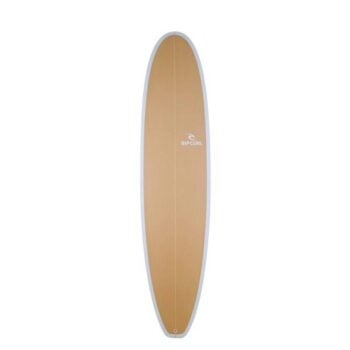
Fibreglass
Fibreglass boards are what you’ll typically see accomplished surfers using. They’re generally regarded as the most high-performance type of board – they tend to perform more smoothly on waves than other boards and best enable surfers to pull off difficult manoeuvres.
If you’re a beginner, of course, this might not sound like something you need. When you’re learning you don’t need to be overly concerned about your cutbacks and snaps, things you’ll learn later on – standing up is probably enough for you at this point. However, all this doesn’t mean they’re unsuitable for learning – plenty of people learn to surf on them, and you will still reap the benefits of a board which performs like these do in the water. If you start off with one of these it also increases the chance that you’ll be able to continue using it even as you develop as a surfer, so they’re definitely worth considering if you’re willing to part with a little more cash.
-
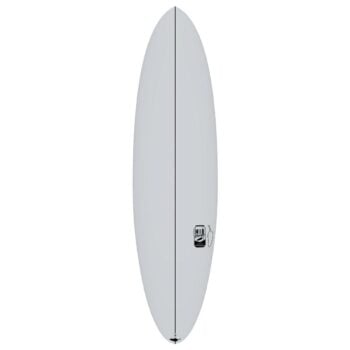
 Chilli Surfboards Mid Strength PuOriginal price was: $1,250.00.$949.00Current price is: $949.00.
 -
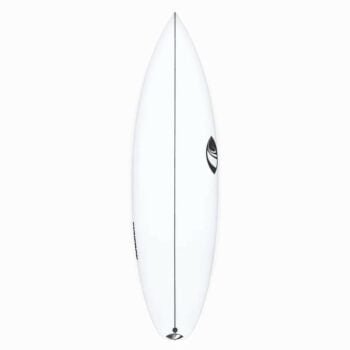
Sharp Eye Surfboards Synergy PuOriginal price was: $1,149.00.$949.00Current price is: $949.00.
-
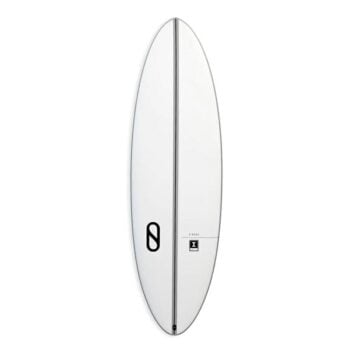
Slater Designs s Boss IbolicOriginal price was: $1,300.00.$949.00Current price is: $949.00.
How to take care of my board
You may have noticed a lot of talk about durability above. This might not be something many people have ever thought about before they start surfing, but the reality is surfboards aren’t cheap, so when you do take the plunge and buy one you want to make sure you can hold onto it for a while – no matter what it’s made of.
Taking care of your board doesn’t need to be difficult, but there are certain things you need to do to make sure it lasts. For starters, be careful when you carry it – it’s incredible how easy it is to walk into things with a board under your arm when you’re not used to it, so make sure you take your time when moving your board around to avoid any unwanted dings (another great reason to start off with a softboard or epoxy board!).
It’s also important to ensure you’ve got somewhere appropriate to leave your board. Boards get damaged very quickly when they’re exposed to too much heat or light, so you need to make sure you’ve got somewhere away from the bright lights of the sun and the moon to store your board or you’ll quickly notice that they become a lot more yellow than they were when you bought them.
And most importantly, be aware of your surroundings when you’re out in the water. Familiarise yourself with the spot where you’re surfing – hidden rocks that you aren’t aware of love to break your boards, as do the boards of other beginners. Make sure you know what’s underneath the water and who is around you, and when you’re paddling into a wave, act like you’re crossing the road – look left, look right, then go!
So now you know a little bit more about the different types of materials surfboards can be made out of, as well as how to get the most out of them. This will hopefully go some way to helping you in your hunt for a board, but we’re not done yet. In the next piece, we’ll go into greater detail about the board size beginners should be looking at – from the benefits of a longer board to how to determine what’s right for you, before we conclude with a piece about some of the better beginner boards on the market.

