


2020 was a crazy year for many reasons, and it was no different in the world of surfing. With the year having finally come to a close, we thought it would be a good time to remind you of some of the stranger things surfing had to deal with throughout one of the most unusual years we will likely ever experience.
2020 ends without a World Champion
As the magnitude of COVID-19 began to sink in, sport leagues around the world began dropping like flies. Initially, it was almost impossible to fathom. Many leagues flagged the idea of competing without crowds back in February or March, an idea which was generally met with ridicule by competitors and fans alike. If only we knew what was to come. No crowds would have been a blessing in comparison to what followed, with leagues shutting down simultaneously all over the planet, and as one of the few to take place across most continents in the world, the WSL was never going to find the pandemic easy to navigate.
And so, before the customary opening event at the Gold Coast could even get underway, the season was put on hold for a few months. In hindsight, opting for a postponement rather than a cancellation was probably wishful thinking, but at least it gave us some cause for hope. Of course, as it turned out that hope was entirely unfounded, but we weren’t to know that back in March.
Eventually the entire season would be called off, leaving us without a World Champion for the first time since 1967. It’s not exactly the most dramatic thing to happen in 2020, but for surfing lovers it will be a lasting reminder of a year which was memorable as much for the things which didn’t happen as for the things which did.
Sharks wreak havoc at first event back
Given the year it was, maybe we should have known that when the World Surf League did finally return in December, it wouldn’t all be smooth sailing. While the men’s leg of the tour was getting back underway with the season-ending turned season-opener at Pipeline, the women were just an island away at Honolua Bay, Maui. During the tournament window, a local surfer was bitten on the leg by a shark and tragically passed away, causing event organisers to shift the event to Pipeline.
It’s not the first time something like this has happened in recent years – Margaret River was moved to Bali after a couple of nearby incidents in 2018 while Jeffreys Bay has had more than its fair share of shark encounters – but it did result in the first even women’s event at one of the most famous surf breaks in the world. A tragedy in Maui resulted in an historic occasion on Oahu, with Tyler Wright, who went on to take out the tournament, citing it as a defining moment in women’s surfing.

Surfing banned in many parts of the world as lockdowns take effect
COVID-19 affected each country in the world differently, and the severity of the restrictions imposed varied significantly too. Surfing was one activity which seemed to be the subject of plenty of conjecture – at least it was for people living in coastal regions where surfing is a major part of the lifestyle. That was certainly the case where I lived – while other activities which many would see as comparably risky such as golf and fishing suffered the government’s wrath and were shut down, we surfers were left to our own devices as long as we showed appropriate caution. Of course, we were all in full agreement with this – presumably the golfers and the anglers were less thrilled.
However, while we were lucky to have the freedom to surf, it wasn’t quite like normal freedom. One local was fined for travelling a couple of hours down the coast on a day where our regular breaks weren’t working, and apparently ‘the surf is no good where I live’ wasn’t a valid excuse to be travelling so far.
Still, having to surf your local break was a better result than what many others had to deal with. In many parts of the world surfing was banned entirely for extended periods to avoid the car park congregations that invariably come with it. The irony of this was that these rules meant many breaks around the globe were subsequently empty and as a result posed minimal risk. Of course, the rules needed to be the same for everybody, but I’m sure there were plenty of surfers around the world for whom the allure of an empty break was too much to ignore, and who are carrying a slightly lighter wallet as a result.

An increase in surfboard demand
Australia has obviously been fortunate to avoid the same magnitude of COVID infections which many other countries around the world have had to deal with, and with surfing avoiding the blacklist across much of the country, many Aussies actually turned to the ocean to get them through a difficult year. 2020 was a year of financial hardship for plenty, but for many others it was a year in which there was a lot more spare time, and courtesy of some government support and a lack of anything to spend money on, a little extra disposal income. The surfing industry was one which benefitted from these factors.
Retail data showed a significant jump in sales of longer surfboards in May – 3,665% compared to the same period in 2019 – just as the restrictions were beginning to take their toll. Many other sports – particularly contact ones – were shunned for the entire year, but in much of Australia at least, surfing was lucky enough to survive the cut, and may have been one of the few industries to benefit as a result.
-
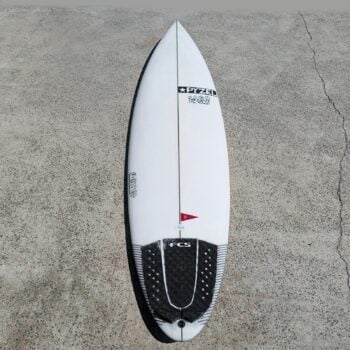
 Used Second Hand Surfboard Pyzel Ghost 6’2$600.00
 -
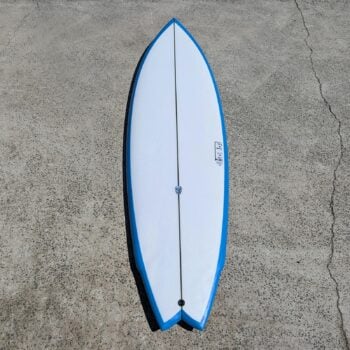
Used Second Hand Surfboard Lane Splitter Swallow 5’10$799.00
-
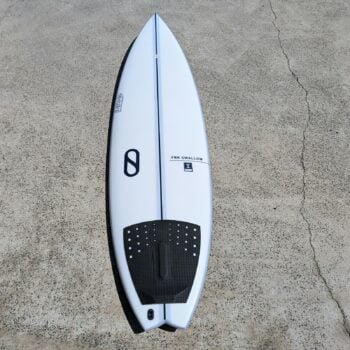
Used Second Hand Surfboard Frk Swallow 6’0$850.00
-
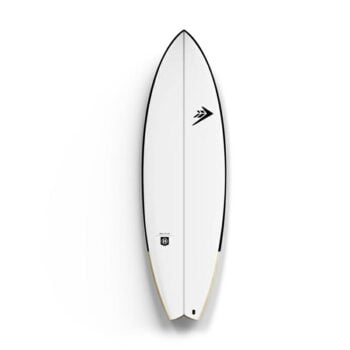
Firewire Surfboards Mashup 2026$1,399.00
-
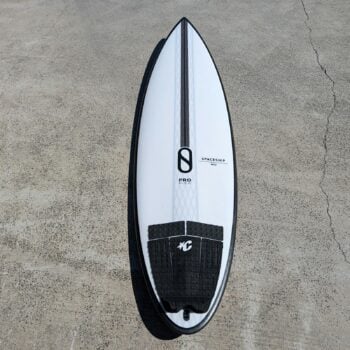
Used Second Hand Surfboard Proflex Spaceship 6’6$850.00
-
Used Second Hand Surfboard Dp Swallow 6’2$500.00
-
Used Second Hand Surfboard Goldie 6’4 x Team George Pittar Board$650.00
-
Used Second Hand Surfboard Prototype x Team George Pittar Board 6’1$650.00
-
Used Second Hand Surfboard Prototype x Team Board George Pittar 6’1$650.00
…but a decrease in supply
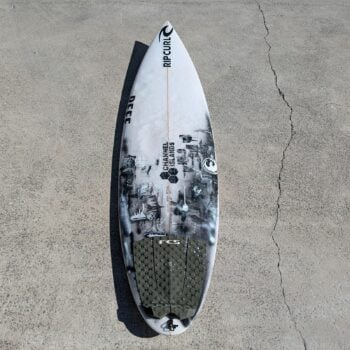
In a year full of catch-22’s though, this uptick in demand was met with a decrease in supply. As was the case in many industries around the world in 2020, the ability to source manufacturing supplies needed for surfboards was severely dented by the pandemic, and this – coupled with the aforementioned increase in demand – saw a dreaded surfboard shortage take place in many surfing hubs around the world.
Where many custom surfboard orders would ordinarily be fulfilled within a week, some shapers around the country saw this blow out to two or three months. This probably didn’t bother the more seasoned surfers too much – if you don’t have a board you can’t drop in on me, after all – but it must no doubt have been a cause for frustration for shapers looking to cash in on the increase in interest, as well as the wide-eyed new surfers sitting at home twiddling their thumbs as they waited in their home offices for their brand new board.
2020 was, and will hopefully remain, an anomaly of our lifetimes, a year filled with frustrations, sadness, boredom, but also a whole lot of firsts. The surfing industry, both from a professional and amateur standpoint, didn’t escape this wrath, and was impacted in different ways around the world. For many, however, the ability to surf more often would have been a redeeming feature of an otherwise bleak year, while for others 2020 will always be the year in which they developed their passion for it. The hope is that 2021 is a year in which some semblance of normality is restored – with any luck, this will be coupled with just as much surfing as the lucky ones among us got to enjoy last year.

